There are questions that come up again and again.
Not in any one conversation, but across many, in emails, in messages, in the tentative way people phrase things when they are asking something they are not entirely sure they’re allowed to ask. I have answered versions of these questions so many times that I know them by feel now, the way you know a path you have walked often enough that your feet find it in the dark.
I want to answer three of them here, properly and in full, because they deserve more than the reassurance I can offer in a single message. They are the questions under a lot of other questions. And if you’ve been carrying any of them, I want you to know that you are not the only one.
Question one: Can I practice witchcraft if I already have a faith?
This is the question I receive most often, and it comes wrapped in more anxiety than almost any other.
It arrives from women who have been raised Catholic and feel the pull of the craft but cannot imagine what their priest would say. From women who are quietly, privately Christian and have never been able to fully reconcile the two things they feel simultaneously. From women who practice Islam or Judaism or any number of other traditions and wonder whether there’s room within what they already believe for what they are feeling drawn toward.
The honest answer is: I cannot tell you what your faith requires of you. That is between you and whatever you hold sacred, and it is not my place to adjudicate it.
But I can tell you what I have observed, and what I believe, and what the historical tradition actually supports.
Witchcraft (as I understand and practice it, as this apothecary is built around) is not a religion. It does not require you to abandon your existing beliefs, adopt new ones, or position yourself in opposition to a God or gods you already have a relationship with. It is a practice of intentional living, of paying attention to natural rhythms, of working with intention and symbol and the accumulated wisdom of the folk tradition. None of those things are inherently incompatible with faith.
The historical record supports this. The cunning women and cunning men of British and Irish tradition, the folk magic practitioners whose lineage we are drawing from when we do this work, operated almost entirely within a Christian cultural context. Their charms incorporated scripture. Their rituals acknowledged the Christian calendar. They did not see themselves as being in opposition to the Church, even when the Church saw itself as opposing them. Integrating magical practice and Christian faith was not a modern compromise. It was the original condition.
What I would say to anyone holding this question is this: bring it to your practice. Not to me, not to an internet forum, not to anyone who tells you with confidence what your faith permits. Bring it honestly to your own quiet, and see what surfaces. The answer you find there will be more reliable than anything I can give you.
Question two: Does it actually help with anxiety?
Yes. With caveats that I will get to, but yes.
I have anxiety. I have had it for as long as I can remember, in the particular form that manifests as a mind that will not stop generating worst-case scenarios at two in the morning. I have managed it with therapy, which helped enormously. I have managed it with meditation, at points when that was what was needed. And I have managed it, consistently and sustainably over years, with the daily and seasonal rhythms of a practice that gives my nervous system something to do other than spin.
Here is what I mean by that. Anxiety is, at its neurological root, a threat-detection system that has become overactive: a mind that is perpetually scanning for danger in situations that do not contain it, a body that is perpetually primed for emergencies that are not arriving. One thing that calms an overactive threat-detection system is rhythm. Predictability. The felt sense that the world has a shape and that you know where you are within it.
The lunar calendar gives me that. The Wheel of the Year gives me that. The morning practice (the candle, the few minutes of stillness, the deliberate act of arriving in my own body before the day begins) gives me that. These are not cures for anxiety. They are not substitutes for professional support when professional support is needed. But they are a genuine, consistently available, entirely free set of tools for interrupting the anxiety spiral before it fully establishes itself, and for building the ground-level steadiness that makes the spiral less frequent.
The grounding practice is the most immediately useful. When anxiety is active,when the body is in the particular state of high alert that anxiety produces, the fastest way back to a manageable state is through the body, not through the mind. You cannot think your way out of an anxiety response. But you can breathe your way out, slowly and deliberately. You can place your feet flat on the floor and feel the pressure of the ground beneath you. You can hold something with texture and temperature (a stone, a piece of wood, a warm cup) and let the physical sensation pull your attention out of your head and back into your hands.
These things work. Not because they are magical in any supernatural sense, but because they engage the parasympathetic nervous system (the part of your nervous system that counteracts the fight-or-flight response) and because they give the anxious mind something specific and sensory to attend to rather than the endless abstract catastrophising it will otherwise default to.
The practice does not make me anxiety-free. Nothing has made me anxiety-free, and I have stopped expecting it to. What it has made me is more able to interrupt the cycle when it starts, more able to return to ground when I have lost it, and more able to tolerate the anxious days without being completely at their mercy.
That is enough. That is, honestly, quite a lot.
Question three: What do you do on the days when it just does not work?
There are days, and I want to be very clear about this, when the practice does not help. When I sit in front of my altar and feel nothing. When I write in my journal and the words are empty. When the moon phase I am supposed to be working with feels completely irrelevant to the specific difficulty I am in. When everything I have built feels like furniture in a room I cannot access.
These days are not failures. They are part of the practice.
A practice is not a machine that produces the same output every time you engage with it. It is a relationship with yourself, with the natural world, with the accumulated weight of everything you have been building over time. And relationships have seasons. There are days when the relationship is alive and resonant and exactly what you need. There are days when it is quiet and flat, and you are not sure it is doing anything at all.
What I have learned over years of having both kinds of days is that the flat days are not evidence that the practice is not working. They are evidence that you are human, and that your capacity for presence and resonance fluctuates, and that some days the most the practice can do is simply be there, available, consistent, unchanged, while you move through whatever you are moving through.
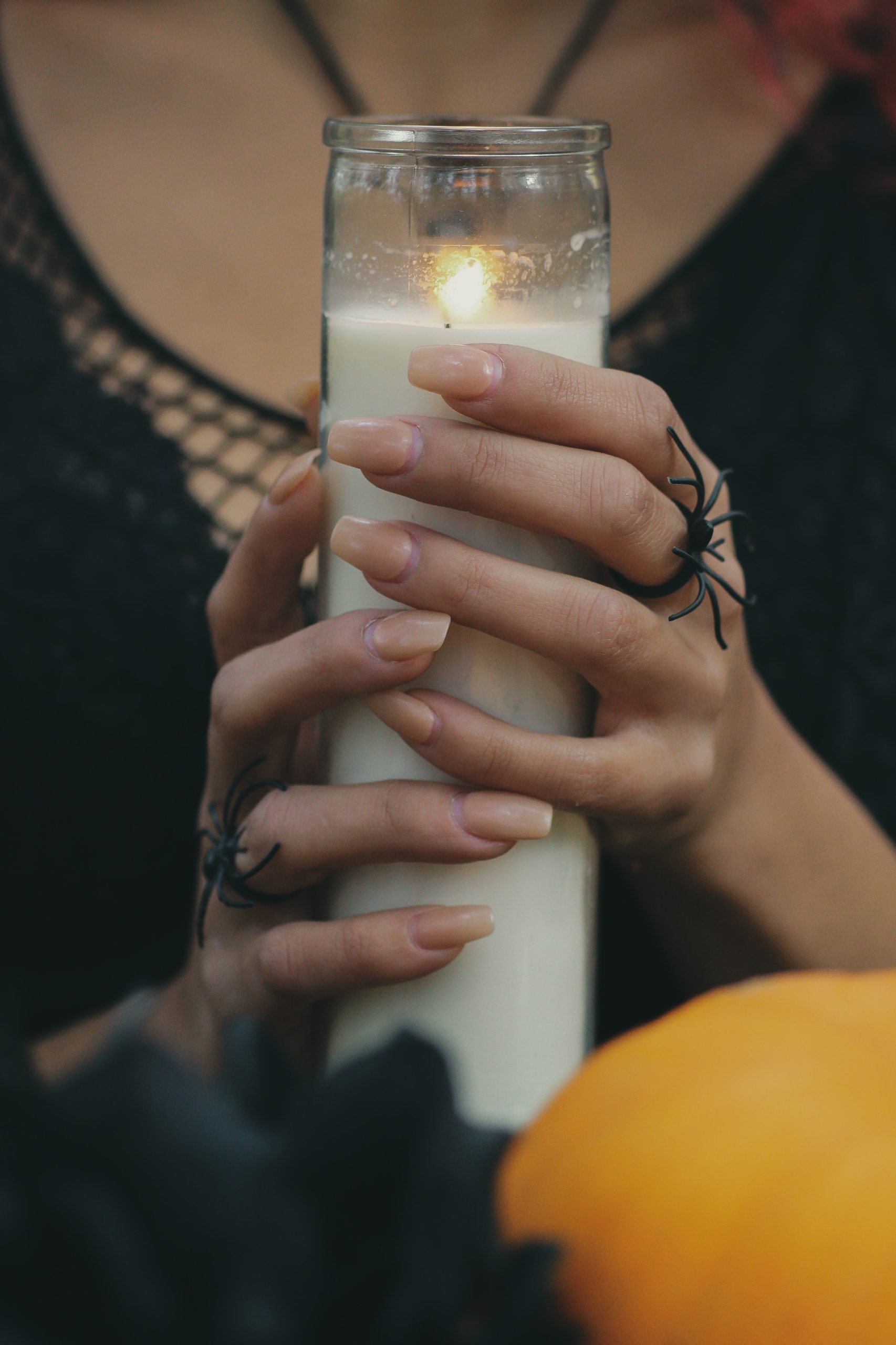
On those days, I do the minimum. I light a candle. I sit in front of it for two minutes. I do not try to feel anything, or achieve anything, or produce any internal state. I just show up in the smallest possible way, because showing up in the smallest possible way is what keeps the thread alive on the days when more is not available.
And what I have found, consistently and without exception, is that the thread holds. That the practice is there on the other side of the flat days, unchanged, ready, exactly as it was. That the consistency of the small showing-up is what makes it possible to fully arrive on the days when full arrival is possible.
The off days are part of it. They are not the opposite of practice. They are practice, in its most stripped-back and most honest form.
You do not need to feel it for it to be working.
You just need to show up.