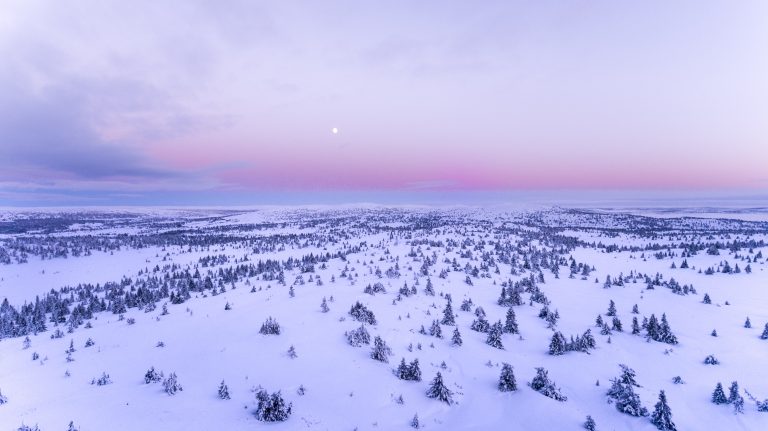
Somewhere in the first days of February, before there is any visible evidence of it, the earth begins to change.
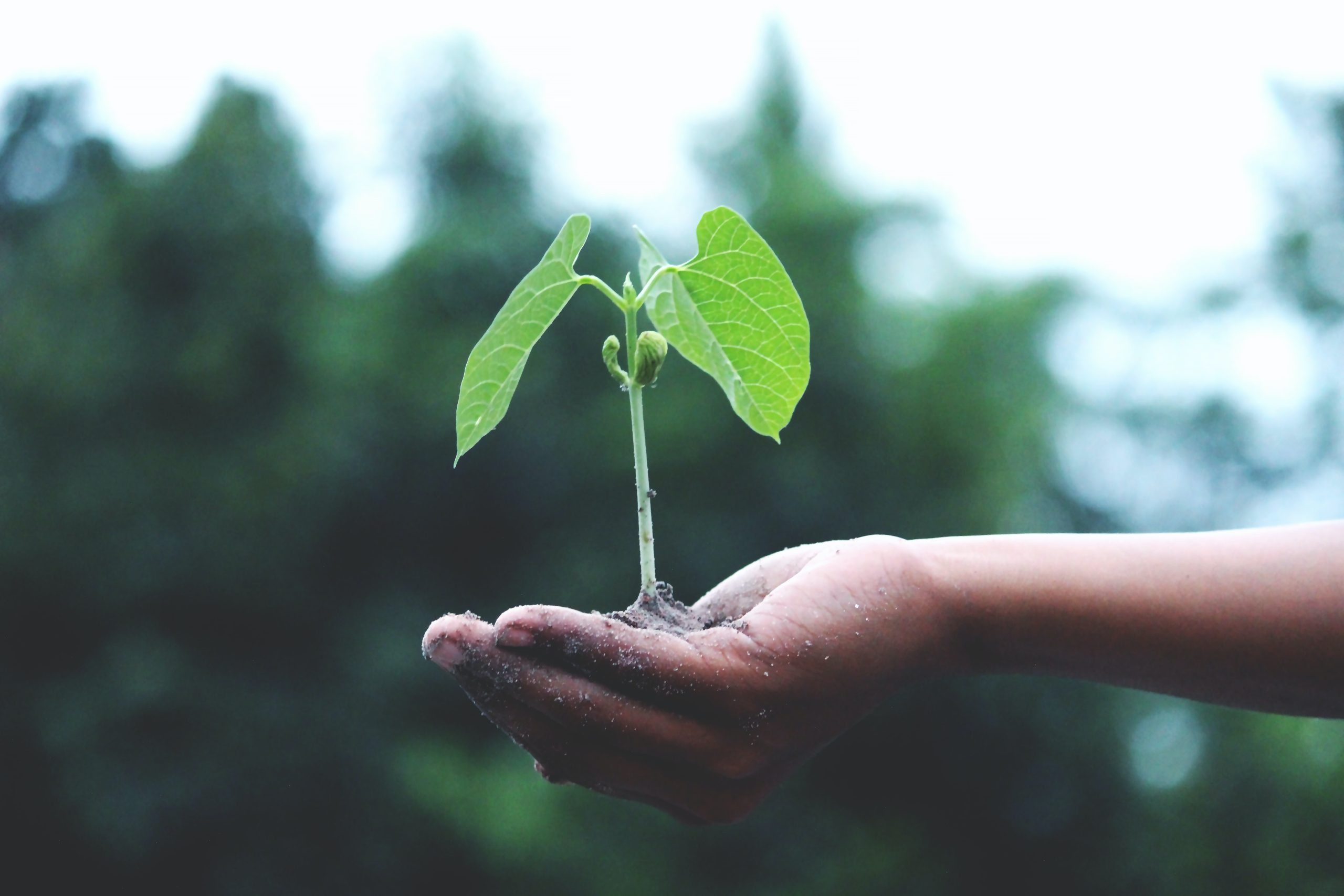
Not dramatically. Not in any way you would necessarily notice unless you were paying close attention. But the light is returning; each day fractionally longer than the last, the angle of the sun shifting imperceptibly toward the warmth it will eventually deliver. Beneath ground that still looks and feels like winter, something is stirring. The sap is beginning to move. The ewes, in the old agricultural calendar, are coming into milk.
This is Imbolc. And the fact that it arrives before there is anything to show for it (before the snowdrops have fully pushed through, before the warmth is anything more than a promise) is, I think, it’s most important quality.
Imbolc is the festival of the threshold moment before the threshold moment. It is the first breath of spring before spring has properly arrived. And in the Irish and Scottish tradition it belongs, more than to any other figure, to Brigid.
Who Brigid is, and why the answer is complicated
Brigid is one of the most layered figures in the British and Irish tradition, and part of what makes her so interesting is that she is genuinely plural; not a single entity with a single story but a cluster of related presences that have overlapped and merged and diverged across millennia.
There is Brigid, the goddess, one of the Tuatha Dé Danann, the divine people of Irish mythology, daughter of the Dagda, associated with poetry, smithcraft, and healing. Three arts, in the Irish tradition, that were understood to share a single underlying quality: the ability to transform raw material into something that did not previously exist. The poem made from experience. The weapon made from ore. The healed body made from illness. Brigid presided over all three because all three were, at their root, the same act.
There is Brigid the saint, one of the three patron saints of Ireland, whose feast day falls on the first of February and whose biography, in the hagiographic tradition, is so thoroughly entangled with the attributes of the goddess that scholars have debated for centuries where the divine figure ends and the historical woman, if there was one, begins. Saint Brigid founded a monastery at Kildare where, according to tradition, a sacred fire was tended by her nuns continuously for centuries; a detail that sits very comfortably in the goddess’s tradition associated with the sacred hearth flame, and very awkwardly in the tradition of Christian monasticism.
And there is Brigid the folk figure, the Brídeog, the Brigid doll made of rushes or straw who was carried from house to house on the eve of her feast day by young women of the community, welcomed at each threshold with gifts and hospitality, understood carrying the blessing of the returning spring into each home she visited. This Brigid is neither a goddess nor a saint in any formal theological sense. She is something older and more immediate than either: a presence in the landscape, in the turning of the year, in the particular quality of early February light.
The customs of Imbolc
The folk customs associated with Imbolc and Brigid’s feast day are among the most consistent and most widespread in Irish and Scottish tradition, documented across centuries and across the full geographic range of Gaelic-speaking communities.
The Brigid’s cross is the most familiar: the four-armed rush cross woven on the eve of the feast and hung over the door or the hearth for the year ahead as a protective charm. The specific design varies by region: some communities made the equal-armed cross, others the three-armed triskele form, others a simple woven square. What all versions share is the material (fresh rushes, gathered on the day, woven quickly and with intention) and the placement: at the threshold, where the house meets the world, where protection is most needed.
The Leaba Bríde, Brigid’s Bed, was a custom particularly documented in the west of Ireland. A bundle of rushes or straw representing Brigid was laid in a small basket or cradle beside the hearth on the eve of the feast, with the door left slightly open and an invitation spoken aloud for Brigid to enter and bless the house. In the morning, the rushes were examined for any impression that might indicate she had rested there.
The threshold customs are everywhere in Imbolc practice. An item of clothing (a piece of ribbon, a length of cloth) left outside on the eve of the feast to be touched by Brigid as she passed was understood to carry healing properties for the year ahead. The first water drawn from the well on Brigid’s morning was considered especially powerful. Anything that crossed a threshold on this particular day carried the possibility of blessing.
What Imbolc is actually about
The folk customs encode something I find genuinely moving when I sit with it: the act of welcoming what has not yet fully arrived.
Imbolc is not a celebration of spring’s presence. Spring is not present, not in any full or warm or blooming sense. Imbolc is a celebration of spring’s intention, of the first barely perceptible stirring beneath the frozen surface of things, of the light that is returning even though the cold has not yet released its hold.
To mark that moment, to set out the bed, to leave the door ajar, to weave the cross and hang it at the threshold, is an act of trust. A statement that you believe in the returning warmth before you can feel it. That you are already making room for what is coming even though it has not arrived.
That is a practice worth having. Not just at Imbolc, not just in February, but as an orientation toward the future generally, the capacity to welcome what is not yet here, to make space for what is still only a stirring, to trust the process before the evidence is available.
Brigid, in all her forms, presides over transformation. Over the moment when the raw becomes the made, the cold becomes the warm, the darkness becomes the light. She is the patron of the threshold moment before the threshold moment.
She is the patron, I think, of anyone building a practice, tending a flame that other people cannot yet see, making room for something that has not yet fully arrived.
The first of February. Leave the door ajar.